Stone worktops made to measure
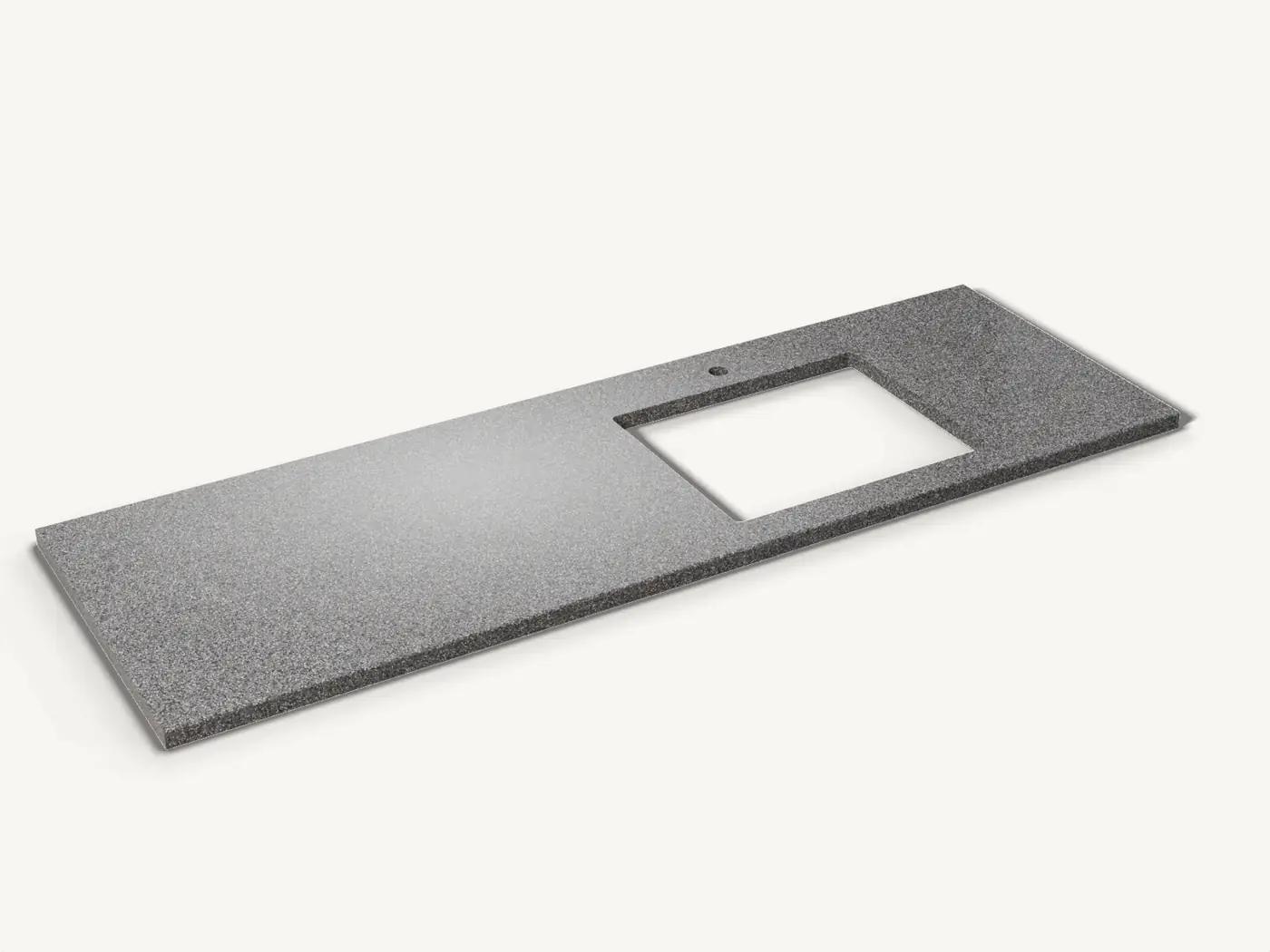
Kitchen, utility and bathroom tops in natural stone, with cut-outs for sinks, hobs and taps. For anything that isn't a simple rectangle, we work from a template of the cabinets.
Shaped to the room, jointed to the slab
Stone comes from slabs of limited size, so a long run or an L-shaped kitchen is often made in more than one piece. Where the joints go matters: they should sit clear of the sink and hob, and in an L or U the corner joint can run either way. The drawing we send back shows every joint, and nothing is cut until you've approved it.
Cut-outs
- Undermount sinks sit below the stone, so the cut-out edge shows. Tell us if you want drainer grooves beside it.
- Inset sinks sit on top, cut to the sink maker's template.
- Hobs need the cut-out size from the appliance manual.
- Tap holes and other holes, such as soap dispensers.
Send the cut-out size from the sink or hob manual, not the outside size of the appliance. They're different, and it's an easy mistake to make.
Measuring for a quote
- Each run: its length along the wall, and its depth front to back, which is the cabinet depth plus the front overhang you want.
- The ends: which are against a wall and which are exposed.
- Corners: if you measure both runs of an L to the outside corner, the corner square is in both numbers. Tell us how you measured so it's counted once.
- Positions: the sink, hob and taps, measured from the nearest end.
- Upstands: the height of any upstand or splashback.
Tape sizes are enough for a quote. Fitted tops are cut from a template of the real cabinets, not from tape measurements.
Edges, upstands and finishes
The details that show once the top is fitted.
- Edges
- Every exposed edge gets the profile you choose: square, pencil round, bullnose or chamfer. Edges against a wall stay sawn.
- Upstands
- A short strip of stone along the wall behind the top, with its joints lined up with the worktop's.
- Splashbacks
- Taller panels behind a sink or hob. Tell us where any sockets or switches sit.
- Finishes
- Polished is ground to a gloss that brings out the colour, mostly for granite and marble. Honed is ground smooth to a matt surface with no shine.
Choosing the stone
- Granite is very hard and dense, and resists staining and heavy wear, which suits a busy kitchen. It takes a high polish, or a honed matt finish.
- Marble is veined and takes a high polish. It's softer, so it's better for vanity tops and interiors with lighter use.
Pick Not sure in the quote builder and say where the top is going, and we'll suggest one.
What we need to quote it
- A plan with the length and depth of each run
- Which edges are against a wall
- The sink: make and model or cut-out size, undermount or inset
- The hob cut-out size, from its manual
- Tap holes and any other holes
- Edge profile, upstands and splashbacks
- The stone, finish and thickness, if you've chosen them
Don't have every measurement yet? Send what you have and we'll ask for the rest.
Questions about stone worktops
Do I need a template before I get a quote?
No. A plan with tape measurements is enough for a quote. Fitted tops are then cut from a template of the real cabinets, because a template records the space as it is, including walls that aren't straight.
Why does my worktop need joints?
Stone is cut from slabs, and each slab has a limited size. A run longer than the slab, or an L or U shape, is made in pieces. We place the joints clear of cut-outs and show them on the drawing for you to check.
Granite or marble for a kitchen?
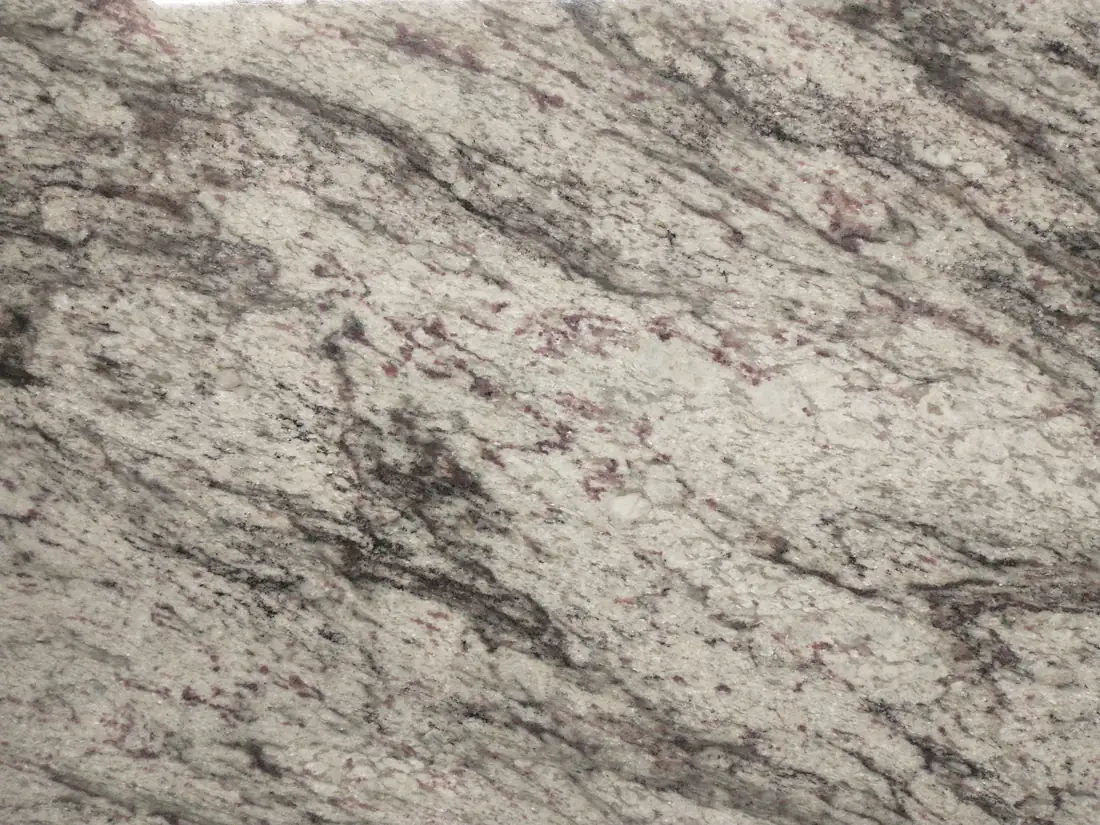
Granite is harder and more resistant to staining and wear. Marble is softer and veined, and better suited to bathrooms and lighter use. Either way, ask to see the stone before you order, as no two slabs are the same.
Can the top have an upstand or splashback?
Yes. Tell us the height for each wall, and where any sockets sit on a splashback. Upstands follow the worktop runs, with joints lined up with the top's.
What affects the price of a worktop?
The stone, the size and thickness of each piece, the edge profiles, the cut-outs and the number of pieces. Your quote breaks these down.