Stone copings made to measure
Copings cut to your wall width and run, with the overhang, profile and drip grooves you choose, and the corner pieces, pier caps and stopped ends your wall needs.
A coping that fits the wall it sits on
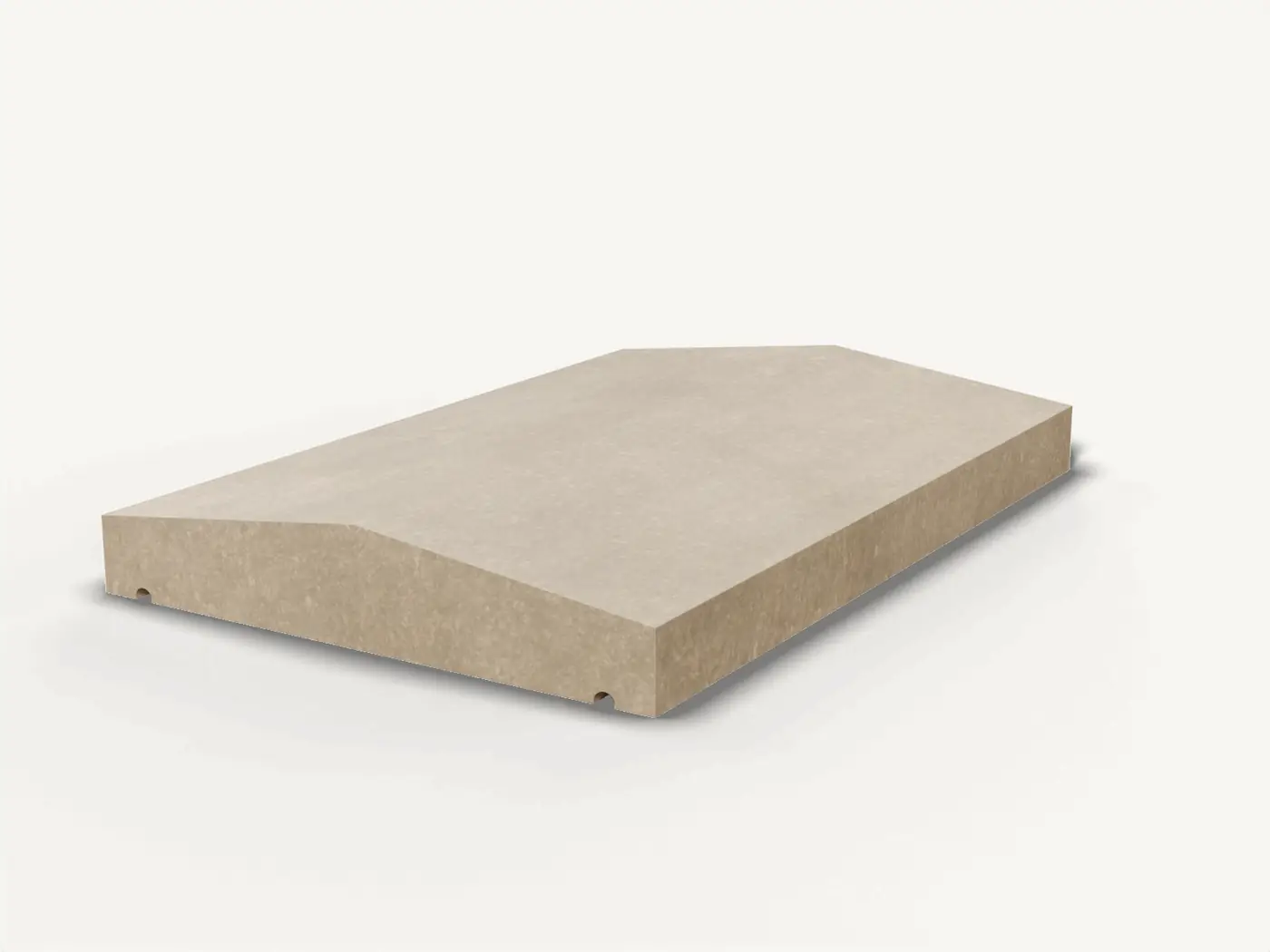
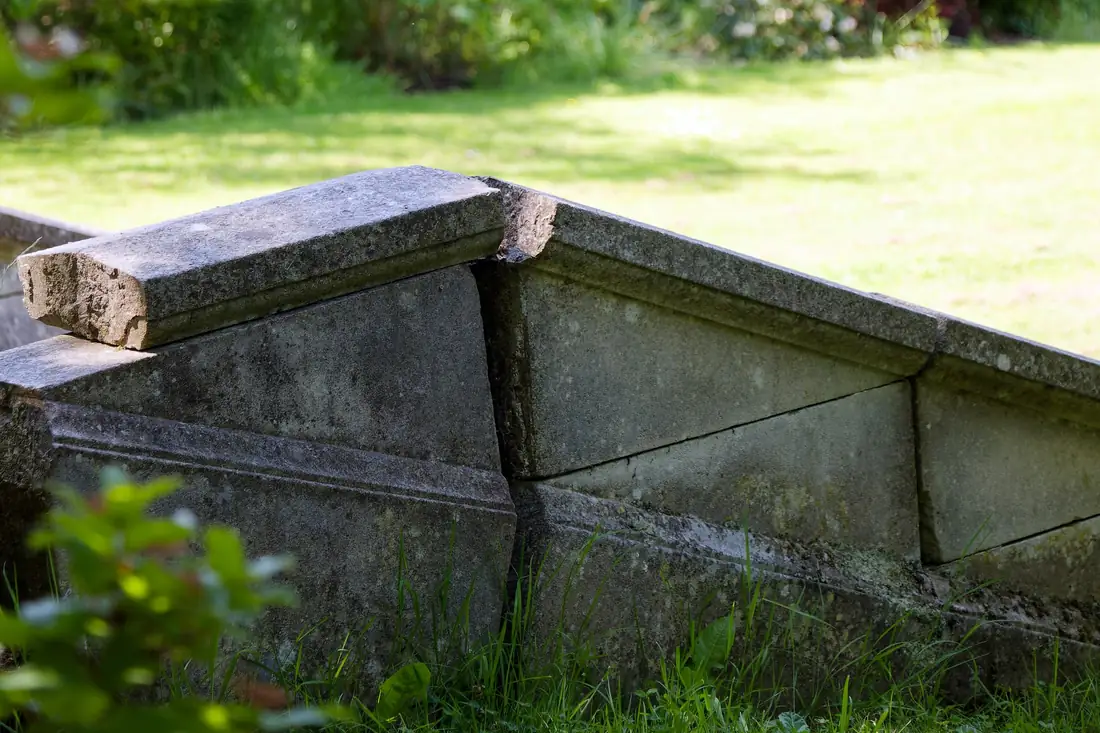
A coping caps the top of a wall and sheds water off it. To do that it's wider than the wall, so it overhangs each face, and a drip groove underneath makes water fall clear instead of running back down the stonework.
The width follows from the wall: wall width plus the overhang on each side. A 300 mm wall with a 50 mm overhang each side takes a 400 mm coping. The overhang can differ from side to side, for example where one face of a boundary wall should finish flush.
Profiles
- Flat. Level on top, with drips underneath to throw water clear of both faces.
- Weathered. Falls to one side, so water runs off one face. Tell us which side.
- Saddleback. Rises to a ridge along the middle and falls both ways.
Drip grooves
A drip groove has to sit under the part that projects past the wall face, so the overhang must be wide enough to clear it. We check this on the section drawing before anything is cut.
Measuring a wall for copings
- Wall width at the top, where the copings will sit. Measure in a few places, as older walls can vary.
- Each straight run, along the outside face, and where it turns a corner.
- Each end: a stopped end that shows, an end against a building or a higher wall, or a pier or gate post.
- Piers: the width and depth of each one.
A run is divided into pieces with a joint between each. You can have equal lengths, or full lengths with one cut piece. For example, an 18 m run in pieces of up to 600 mm with 10 mm joints works out as 30 pieces of 590 mm, or 29 full pieces and one of 310 mm.
Corners, piers and ends
The straight lengths are the simple part. These are the pieces that make a wall look finished.
- Corners
- A separate L-shaped corner piece, a mitred pair cut at 45°, or one run butting into the other. Each looks slightly different on the wall, so say which you prefer.
- T-junctions
- Where a wall branches off another, the branch can butt into the main run, or a T-shaped piece can join them.
- Pier caps
- Sized from the pier: its width and depth plus the overhang on every side. Flat, or weathered on all four sides.
- Stopped ends
- An end of the wall that shows. The end piece is finished on its end face, and the drip stops short of the end so water doesn't track round onto the face.
- Curved walls
- Send the radius and the length along the curve. Pieces on a curve taper, so we confirm the piece count on the drawing.
Choosing the stone
- York stone is a hard sandstone, buff to grey-blue, that weathers well outside.
- Slate is dark and fine-grained, and splits naturally along its layers.
Stone varies from block to block, so colour and markings won't match a photo exactly.
What we need to quote it
- The wall width, and the length of each run
- The overhang you want on each side
- The profile: flat, weathered (and which way) or saddleback
- Drip grooves: none, one side or both
- Any corners, piers, gate posts and stopped ends
- The stone and finish, if you've chosen them
- A sketch of the wall from above, if it turns corners
Don't have every measurement yet? Send what you have and we'll ask for the rest.
Questions about stone copings
How far should a coping overhang the wall?
It's your choice, within what the drip needs. The overhang has to be wide enough for a drip groove to sit under the projecting part. Tell us what you'd like and we'll check it against the drip on the drawing.
Do I need drip grooves?
Without one, water running off the coping can creep back underneath and down the face of the wall. A groove breaks that path so drops fall clear. You can have them on one side, both, or none.
Should I order extra for waste?
No. Each coping is cut to its own length, so there's no cutting allowance to add, as there would be with stock lengths cut on site.
My wall isn't the same width all along. What do I do?
Measure the width in several places and send them all, with where each was taken. We'll ask about anything that looks inconsistent before quoting.
Can you match old copings?
Send photos in daylight and, if possible, a small piece of the existing stone. We'll tell you how close a match we can get before you order.